

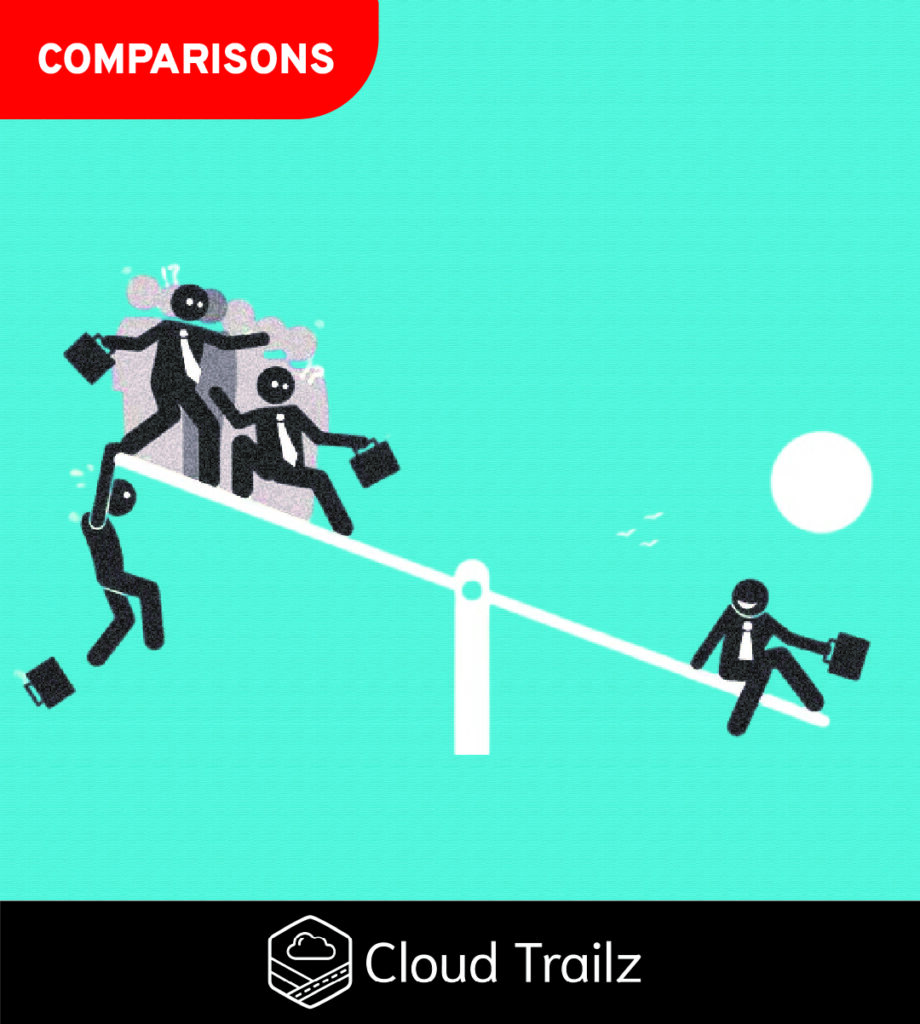
The Real Decision
You have 2 proposals on the table.
One from a bespoke smaller firm and one from a much larger firm.
You’re trying to decide: Small Salesforce Consulting Firm vs Large Salesforce Consulting Firm.
You need to know how to select based on what you’re looking for and what works for you.
Larger firms will naturally have more:
- Resources
- Frameworks
- Case studies
- Specialists
- Certifications
- Formalized methodologies
- Relationships with Salesforce
- Global delivery capacity
Smaller firms excel when it comes to:
- Alignment
- Responsiveness
- Continuity
- Flexibility
- Direct access to leadership
- Accountability
- Speed of execution
Neither is wrong, but when customers aren’t honest with themselves that’s when things get dicey.
Small firms tend to toss shade at larger ones by saying they are bloated. Which is obvious and unhelpful. Large companies across the globe are bloated.
Large firms tend to toss shade at smaller ones by saying they have less experience. Which is also obvious and unhelpful. Small companies universally have less experience than large companies across industries across the globe.
I’ve been in both and they have pros and cons.
The finger pointing is honestly very ridiculous.
There’s room for both and they service different wants and needs of customers.
Small Salesforce Consulting Firm vs Large Salesforce Consulting Firm: The Short Answer
In my experience it comes down to what you are actually buying that the other can not meaningfully provide.
Large Firm
If you value name brand recognition and a seemingly endless bench of resources then go with the larger firm.
Examples:
- Accenture
- Deloitte
- IBM Consulting
- Slalom
- Capgemini
- Coastal Cloud
Small firms can not compete in the same solar system as larger firms when it comes down to pure resource availability.
For some consumers this is a psychologically safer buy.
Especially internally.
It is easier to explain:
“We hired Deloitte”
Than:
“We hired a 7 person firm in Atlanta.”
That matters in some organizations whether people want to admit it or not.
Small Firm
If you value a team and business whose success is more aligned with your company’s success then choose the smaller firm.
The truth of the matter is that at a large firm the success of your implementation or engagement is negligible to the trajectory of the company.
In a small firm it’s in their best interest to ensure your success.
A bad implementation for a large firm is unfortunate.
A bad implementation for a small firm can be catastrophic.
That changes behavior.
Large Salesforce Consulting Firms: What They Do Well
Large firms tend to have an abundance of resources:
- People
- How to guides
- Methodologies
- Industry references
- Data models
- Escalation paths
- Training structures
- QA teams
- Governance frameworks
If you go with a large firm the possibilities are relatively endless.
You will have exposure to people who have likely seen your problem or a problem like it in 10-15 different ways.
Large firms also naturally accumulate a larger and more manicured footprint of AppExchange reviews because they simply do more volume over time.
They also tend to have stronger relationships with Salesforce itself.
That can help with:
- Escalations
- Roadmap visibility
- Support navigation
- Pilot programs
- Early product access
- Executive alignment meetings
Large firms may also have dedicated layers of specialists like architects, developers, project managers, QA resources, and adoption teams that smaller firms simply cannot support economically.
If your project requires:
- Deep integration work
- Eerprise governance
- Multi-cloud deployments
- Global rollout coordination
- Heavy compliance requirements
- Ofshore development models
A larger firm may objectively be the better fit.
Large Salesforce Consulting Firms: Where It Breaks
Your account is one in a large basket of accounts.
If the company has done thousands of projects then you are just one to add to the belt.
Don’t expect people to have time to dive deeply into what you do, what works, or what doesn’t work.
It isn’t that they don’t want to.
It’s that the structure doesn’t allow it.
In a large firm the people on projects often have:
- Multiple clients
- Utilization targets
- Citation targets
- Internal meetings
- Internal reporting obligations
- Cross-functional demands
There are simply limits to how much mental bandwidth can go into your business.
They will absolutely be talented though.
Which means you will have exposure to people who have seen a lot.
Large firms also tend to have more junior resources because larger organizations can absorb inefficiency more easily.
That’s not an insult.
It’s just math.
A smaller firm may not survive repeated junior-level mistakes.
A larger firm can.
Large firms also tend to operate with internal certification quotas, which creates a situation where people accumulate knowledge and never use it.
It’s not uncommon to see someone with 15-20 certifications who still struggles with practical business design.
There’s also a flip side to firms having a great relationship with Salesforce.
That tends to happen because the firm is tightly aligned with Salesforce’s goals:
- Selling licenses
- Expanding products
- Increasing consumption
- Driving adoption metrics
That alignment can absolutely help you.
It can also create situations where products get recommended that your business honestly doesn’t need.
Small Salesforce Consulting Firms: What They Do Well
Your company’s success and their success is much more tightly aligned.
The smaller number of accounts means they don’t have the luxury of treating you like “another account.”
That doesn’t make them morally superior.
It’s just structural reality.
Smaller firms HAVE TO care more about customer outcomes because:
- Referrals matter more
- Retention matters more
- Reputation matters more
- Churn hurts more
- Failed projects hurt more
Smaller firms also tend to have denser experience.
A lot of smaller firm owners started their companies because they wanted to escape bureaucracy, work efficiently, build differently, develop tighter relationships, or innovate in ways that are not feasible at larger firms.
The people inside smaller firms often have to be stronger generalists by nature.
A weak hire inside a 6 person company hurts badly.
A weak hire inside a 2,000 person company disappears into the wallpaper.
Smaller firms also tend to provide:
- Faster decisions
- Direct owner involvement
- Tighter communication loops
- More flexibility
- Quicker pivots
- Less red tape
- Lower meeting overhead
- Better continuity
You are also much less likely to experience turnover on your account simply because there is no one to turn it over to.
One of our longest standing customers came to us specifically because he said:
“I didn’t want to just be a number at a large boy shop.”
Your feedback is also much more likely to materially influence how the business operates because you are usually only 1-2 layers away from ownership.
That’s very different from trying to influence a 5,000 person consulting organization.
Small Salesforce Consulting Firms: Where It Breaks
Just by pure math smaller firms will have a smaller scope of Salesforce products and functionality they can reliably support.
10 people can’t know what 300 people know.
That’s not negativity.
That’s arithmetic.
A larger firm may have the resources to support:
- Complex MuleSoft programs
- Deep Data Cloud implementations
- Global CPQ deployments
- Large offshore development teams
- 24/7 support structures
- Advanced enterprise architecture programs
Where a smaller firm may focus primarily on:
- Sales Cloud
- Service Cloud
- Managed services
- Integrations
- Process improvement
- Operational support
Small firms also tend to have less:
- Formal documentation
- Internal QA structures
- Layered governance
- Back-office sophistication
- Procurement flexibility
- Compliance infrastructure
Smaller firms also usually have less leverage with Salesforce itself.
They generally can’t pull strings the way larger firms can.
If you need massive enterprise coordination, small firms can struggle.
Small Salesforce Consulting Firm vs Large Salesforce Consulting Firm: The Real Tradeoff
This is not really a question of which is better.
It’s which downside are you more comfortable with.
That’s the real tradeoff.
If you choose the large firm:
- You gain resources
- Process depth
- Bench strength
- Political safety internally
- Broader technical exposure
But you sacrifice intimacy, flexibility, direct access, alignment, and speed.
If you choose the small firm:
- you gain responsiveness
- continuity
- tighter alignment
- speed
- stronger accountability
But you sacrifice scale, depth of bench, enterprise breadth, formal structure, and specialized niche coverage.
This is where meaningful evaluation matters.
You need to ask yourself:
- How complex is our environment really?
- How much hand holding do we want?
- How much process do we want?
- Do we value flexibility or structure more?
- Do we need niche specialists?
- Do we want direct access to leadership?
- Are we buying expertise or political safety?
Because once you strip away the marketing, this becomes an emotional and operational fit decision.
Best Fit for Each
Large Firm Best Fit
You are likely a better fit for a large Salesforce consulting firm if:
- Your environment is highly complex
- You need enterprise governance
- Multiple departments are involved
- Compliance matters heavily
- You need niche specialists
- Your executive team values brand recognition
- Your organization prefers formal process structures
- You need scale more than intimacy
Small Firm Best Fit
You are likely a better fit for a smaller Salesforce consulting firm if:
- You want tighter alignment
- You value responsiveness
- You want direct access to leadership
- You dislike bureaucracy
- You need practical execution
- Your company moves quickly
- You want continuity
- You care deeply about relationship quality
The Common Mistake
People are not honest with themselves about what they want.
Don’t pick a small firm and expect:
- Massive bench strength
- Endless specialization
- Enterprise scale
- Giant delivery infrastructure
It’s not happening no matter what they tell you.
On the flip side don’t pick a large firm and expect:
- Constant executive attention
- Highly personalized care
- Tight continuity
- Extreme responsiveness
It’s not happening no matter what they tell you.
Customers get into trouble when they buy emotionally and evaluate structurally later.
Closing Thought
There is a reason I chose to focus on alignment in this article.
I’ve been around hundreds of consultants.
By and large they are all talented.
The bigger difference is the environment they work inside.
Large firms incentivize people to care about administrative things like utilization, certifications, process adherence, account expansion, internal metrics, and scale.
Small firms incentivize people to care about retention, referrals, continuity, practical outcomes, responsiveness, and relationship quality.
That’s where you have to decide where you fit, what you want, and how to best proceed.
Cloud Trailz will always be a small firm.
I personally dislike politics (it burns the inside of my bones), but that’s not a universal truth for all buyers.
I’m not interested in red tape and I want our people to focus on what actually helps the other person on the other side of the screen.
If that’s something you want to see in your Salesforce partner let’s chat.
We can make it work for you and your team.