

Why Salesforce Project Timelines Are Fake
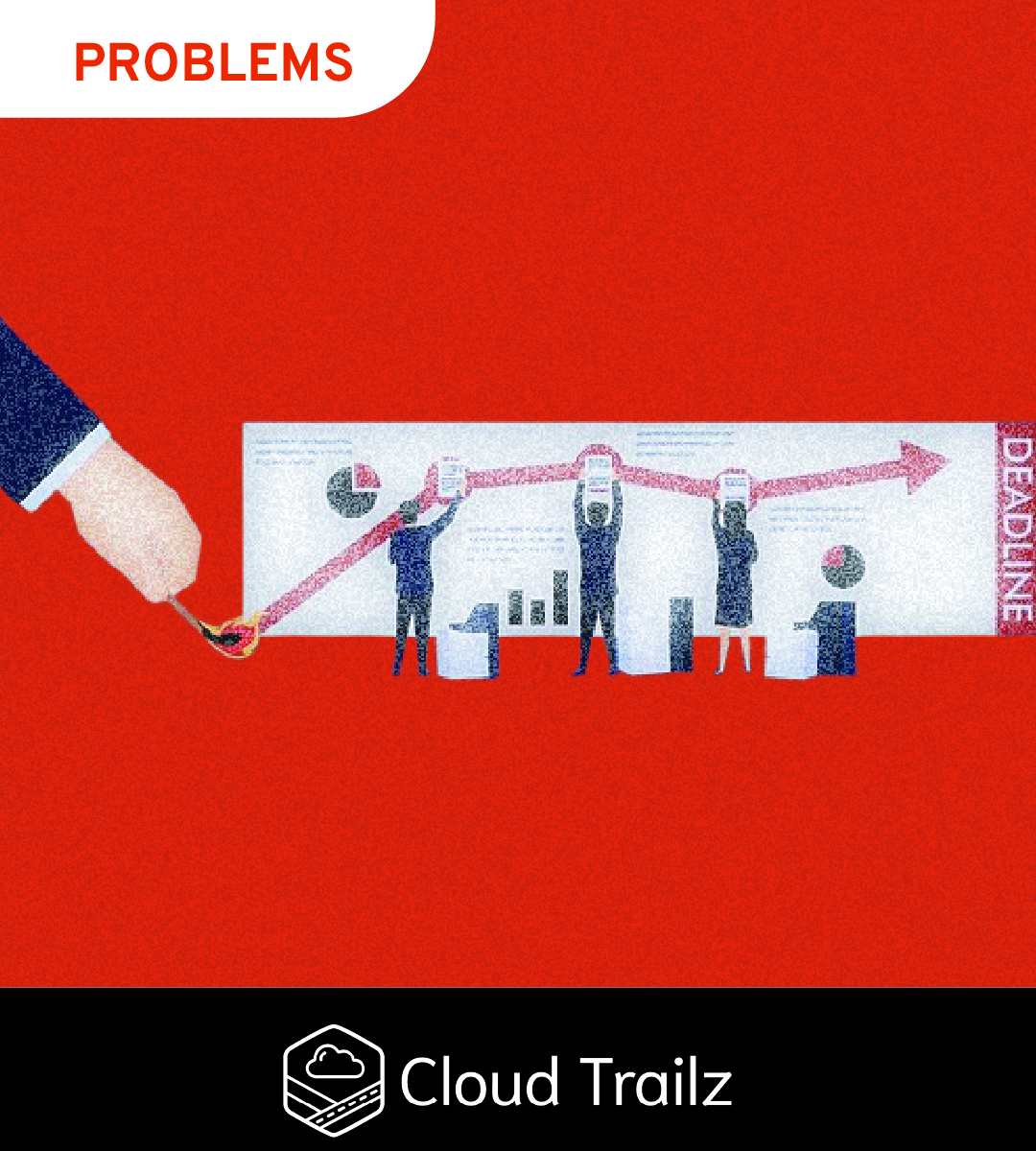
If you’ve ever dealt with Salesforce project timeline problems, you’ve probably had this experience:
You get a clean project plan.
-
~ Phases are mapped
-
~ Dates are assigned
-
~ Everything looks organized
And then.
Nothing happens on time. Deadlines slip. Work drifts.
Expectations get cloudy with a chance of meatballs.
And you’re left wondering:
“Was this timeline ever real to begin with?”
Short answer:
No.
Salesforce Project Timeline Problems Explained
Salesforce project timelines are built on the perfect reality.
We all know how often perfect reality and plans line up.
Competing priorities, unclear ownership, human behavior, and ever evolving requirements show up constantly.
All of these introduce friction and turn that pretty timeline into a best guess.
Why Salesforce Project Timelines Look Good on Paper
Project timelines exist to give structure, visibility, and a sense of control.
From a buyer’s perspective, that matters.
You want to know when this stuff will get done, what happens next, and how long the individual components take.
The natural response to that is to give you a timeline.
The problem is:
The structure looks clean but the lived environment is messy.
Once the project hits real life, those clean timelines run into messy execution.
The Core Idea: Why Salesforce Project Timeline Problems Are Inevitable
Salesforce project timeline problems aren’t caused by bad intentions.
They’re a result ofhow these environments actually operate.
For a timeline to hold, a few things must be true:
-
1 ~ The project manager has real authority
-
2 ~ The customer is equally accountable
-
3 ~ Rework is expected and planned for
-
4 ~External dependencies are controlled
In most projects…
None of those are fully true.
So the timeline breaks.
The Real Reasons Salesforce Project Timelines Break
Matrix Organizations Create Chaos
Most Salesforce projects operate in matrix environments.
That means people report to different managers, priorities come from different directions, and no one person controls the whole system.
So when a project manager says:
“We need this by Friday”
The reality is:
“We’ll get to it if it aligns with everything else we’re doing.”
That’s not a timeline problem. That’s a structure problem.
Every project manager you know would gladly trade their ability to operate in a highly matrixed environment for the peace and tranquility of direct reporting and clear lines of sight.
Customer Accountability Gaps
Customers are often a major reason timelines slip.
Not intentionally. Practically.
A large portion of people who buy consulting services believe their payment shifts all accountability onto the consultant.
In reality that means that requirements sit in inboxes for a week, feedback takes much longer than expected, decisions get delayed, and stakeholders are unavailable.
Meanwhile, none of that lag is transferred to the expected end date.
Rework Is Inevitable
Salesforce projects always involve interpretation.
What’s said in discovery sounds clear and feels agreed upon.
But once users see the system they react differently, they want changes, and they refine expectations.
There is no human being alive who can accurately predict this.
This creates rework.
It’s normal.
Third-Party Dependencies
If you introduce another system or vendor (ERP, Marketing Automation, Billing) then expect another timeline, set of priorities, and layer of coordination.
They don’t work for or report to your consultant.
So now your timeline depends on people you don’t control.
That’s a big reason Salesforce project timeline problems show up fast.
Environments Not Designed for Throughput
Many consulting environments are not designed to finish work quickly.
They are designed to bill time.
Those are two very different goals.
In a time-based model:
-
~ More work = more revenue
-
~ Rework = more revenue
-
~ Extended timelines = more revenue
That doesn’t mean people are acting maliciously. But the system simply does not reward speed.
What This Looks Like in Real Life
Scenario 1: The “Simple Change” That Takes Weeks
A sales leader asks for:
“Just a small update to our pipeline”
Timeline says: 2–3 days.
In reality there is review, clarification, build, feedback, revision.
2 – 3 weeks later you have your finished product.
Not because people are slow, but because the system is layered.
Scenario 2: The Waiting Game
Consultant delivers work.
Now waiting on client feedback, stakeholder approval, and data validation.
What is articulated as a top priority turns out to be something people get to when they have time.
Scenario 3: The Domino Effect
One delay triggers another:
-
~ Missed requirement → delayed build
-
~ Delayed build → delayed testing
-
~ Delayed testing → delayed release
Now everything shifts.
That is how timelines unravel.
The Common Mistake: Pretending the Timeline Is Real
The biggest mistake is treating the timeline like a contract.
Instead of:
a flexible model based on assumptions
Consultants do not like holding clients accountable. Most don’t even think they can.
Project managers don’t control resources so they have to rely on influence instead of shared accountability.
Clients operate on their own schedules and then remove themselves from the equation when it’s time to take deadlines.
This combination creates finger pointing, frustration, and missed expectations.
What Actually Makes a Salesforce Timeline Work
Timelines can work, but only under the right conditions.
What Good Looks Like
-
~ Clear ownership on both sides
-
~ Fast feedback cycles
-
~ Defined priorities
-
~ Accountability enforced both ways
What Bad Looks Like
-
~ “We’ll get to it when we can”
-
~ Unclear decision-making
-
~ No urgency
-
~ Passive communication
The Key Shift
Stop treating timelines like guarantees. Start treating them like coordination tools that require discipline, communication, and mutual accountability.
Final Thought on Salesforce Project Timeline Problems
Salesforce project timelines aren’t fake because people are lying.
They’re unreliable because:
the system they operate in ignores the unpredictable nature of reality.
Once you understand that, things get clearer.
You stop asking:
“Why is this late?”
And start asking:
“What is actually slowing this down?”
This is where the magic happens.
If you’ve been dealing with Salesforce project timeline problems and want a more structured, accountable way to actually move work forward, we can help.
We run a tighter model that prioritizes throughput, alignment, and shared accountability.
Reach out if you want to see what that looks like in practice.