

Salesforce Admin Bottleneck: Are you Being Held Hostage?
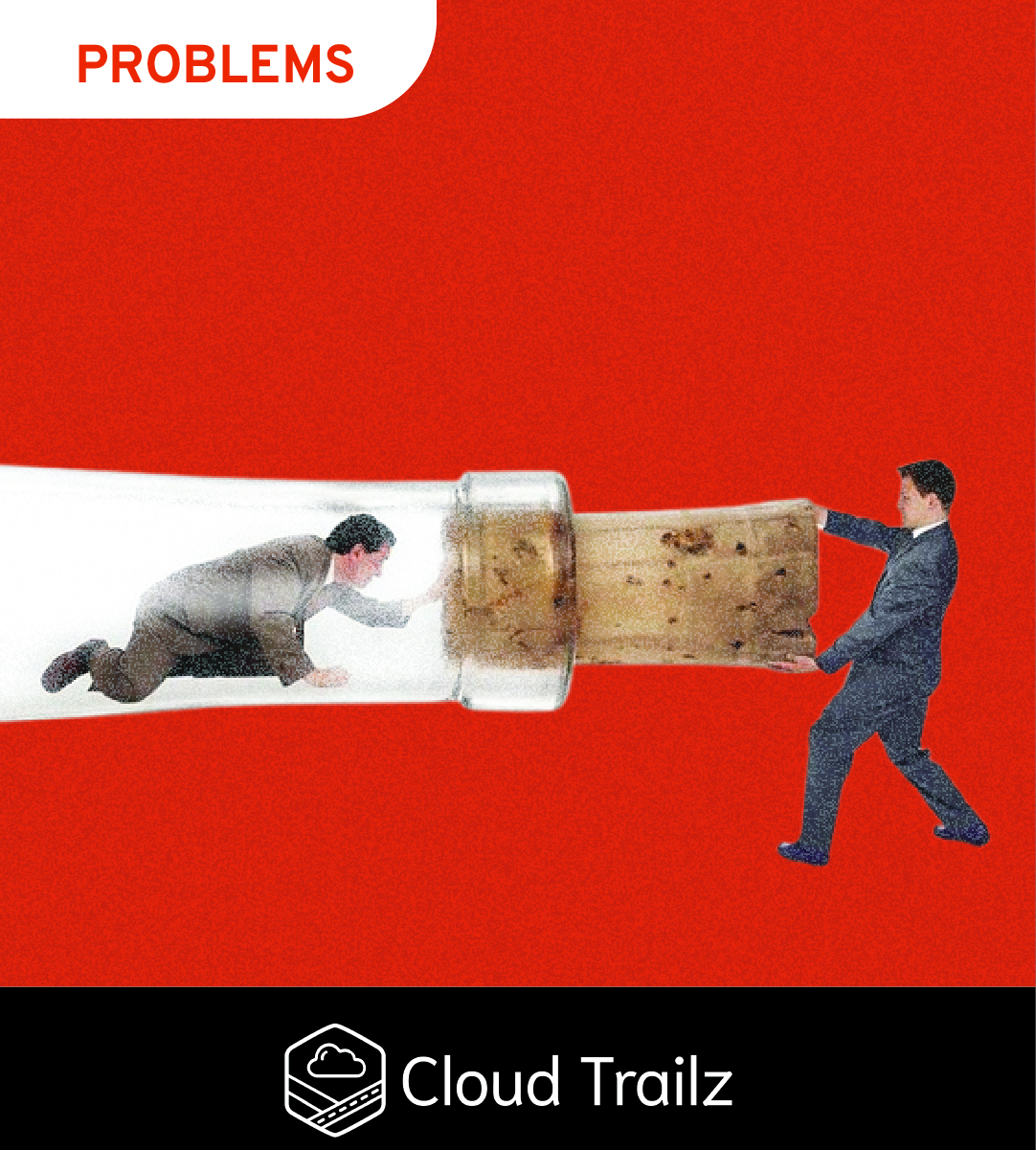
If you’re wondering whether you’re dealing with a Salesforce Admin Bottleneck, you’re probably already feeling it.
Something feels off.
Your Salesforce system may technically be running, but every change feels hard. Every request takes too long. Nobody seems to fully understand how anything works except one person. And instead of feeling like your CRM belongs to the business, it starts to feel like it belongs to your admin.
That’s usually the first real sign.
At some point, the question moves from:
“Why is Salesforce so difficult?”
to:
“Is my Salesforce admin holding this whole thing hostage?”
That’s what a Salesforce Admin Bottleneck looks like in real life.
And it’s a very uncomfortable realization. Especially if the person involved is smart, well-liked, or has been around for a while.
But it’s a fair question.
Because sometimes what looks like a Salesforce problem is really a control problem.
The Short Answer: Is This a Salesforce Admin Bottleneck?
There are ways to tell.
If your system is becoming harder to understand, harder to change, harder to access, and harder to manage without one specific person involved, you may be dealing with a Salesforce Admin Bottleneck.
That doesn’t automatically mean the person is malicious.
In many cases, they’re just trying to protect their role.
But good intentions don’t excuse bad structure.
If someone is making themselves hard to replace by hoarding knowledge, overbuilding the system, slowing change, or controlling access in ways that hurt the business, that’s not acceptable.
And if that’s happening, you should seriously consider changing how your system is managed.
Why Salesforce Admin Bottlenecks Happen
A lot of these situations start with a hiring mistake.
The company wants Salesforce coverage, so it hires a full-time admin.
That sounds reasonable on paper.
The problem is that many companies do not actually need someone configuring Salesforce forty hours a week. They just want support, maintenance, and someone who can make changes when needed.
That’s not the same thing.
Very few companies need a full-time Salesforce admin constantly changing the system unless they are operating at very large scale.
But once someone is hired full time, the economics change.
Now that person needs enough work to justify their role.
And because Salesforce admins are smart people who understandably care about job security, a bad pattern can emerge.
Not always intentionally.
But gradually.
Small decisions start creating dependency.
Dependency turns into control.
And control becomes a bottleneck.
The Core Idea
You may be in the unfortunate situation of being held hostage by your Salesforce admin.
And to be fair, this person usually just wants to keep their job.
That part is human.
The problem is the method.
If job security is being created through control, confusion, fragility, and dependency, then the business is paying the price for that security.
That’s backwards.
A healthy Salesforce environment should create clarity, speed, and confidence.
A Salesforce Admin Bottleneck creates the opposite.
The Common Mistake
The biggest mistake companies make is letting the situation drag on.
They sense something is wrong, but:
-
~ They avoid conflict
-
~ They don’t want to challenge the admin
-
~ They don’t want to risk breaking the system
So they tolerate it.
Meanwhile:
-
~ The system gets more fragile
-
~ Employees get more frustrated
-
~ Customers feel the slowdown
-
~ Leadership loses control
What starts as inconvenience becomes dependency.
And dependency becomes leverage.
Warning Signs of a Salesforce Admin Bottleneck
1. The System Gets Overbuilt to the Point of Fragility
Simple processes become overly complex.
You start seeing:
-
~ Layers of automations
-
~ Unnecessary custom objects
-
~ Edge-case logic everywhere
At first, it looks impressive.
Over time, it becomes fragile.
Nobody wants to touch anything because it might break something else.
This is one of the clearest signs of a Salesforce Admin Bottleneck—complexity becomes a shield.
What this looks like in real life:
A simple lead routing change turns into a discussion about flows, dependencies, and risks across unrelated parts of the system.
Buyer translation:
“I’m afraid to touch anything in my own CRM.”
2. Knowledge Is Hoarded Instead of Documented
A healthy system is documented.
A bottlenecked system lives in someone’s head.
You notice:
-
~ No documentation
-
~ No diagrams
-
~ No clear decision history
Everything requires explanation.
If the admin is unavailable, progress stops.
Good vs bad behavior:
-
~ Good: explains, documents, enables others
-
~ Bad: “I’ll handle it” (every time)
Buyer translation:
“This doesn’t feel like our system—it feels like theirs.”
3. Access and Permissions Become a Power Lever
Permissions start to feel political.
Requests for access are met with:
-
~ Delays
-
~ Vague concerns
-
~ Unclear reasoning
Sometimes those concerns are valid.
But without transparency, leadership loses control.
Scenario:
A VP needs reporting access but waits weeks while the request is debated instead of solved.
Buyer translation:
“I don’t fully own a system I’m paying for.”
4. Artificial Complexity Is Used to Justify Control
Some things in Salesforce are complex.
But not everything is.
A major warning sign of a Salesforce Admin Bottleneck is when everything is treated like it’s complex.
-
~ Small changes feel big
-
~ Simple requests get delayed
-
~ Everything becomes “not straightforward”
Now the business can’t tell what’s actually hard.
Buyer translation:
“I can’t tell what’s real complexity anymore.”
5. Slow Execution Becomes the Norm
Speed tells the truth.
If everything takes longer than it should:
-
~ Hours become days
-
~ Days become weeks
-
~ “in progress” never ends
you have a bottleneck.
A good admin helps the business move faster.
A bottleneck slows everything down.
Your company needs to be at the size and scale required to have a full-time admin. If it is, then that person needs to be a key driver that pushes the system forward instead of an anvil holding it back.
Buyer translation:
“Salesforce is slowing us down instead of helping us move.”
6. No Alignment with Business Outcomes
The admin focuses on:
-
~ Fields
-
~ Flows
-
~ Technicalities
Instead of:
-
~ Revenue
-
~ Pipeline
-
~ Efficiency
Salesforce becomes a technical project.
Not a business tool.
That’s a clear sign of a Salesforce Admin Bottleneck.
Buyer translation:
“This feels like a tech project, not a business tool.”
7. Change Becomes Emotionally Charged
When feedback becomes difficult, the system stops improving.
You see:
-
~ Defensiveness
-
~ Resistance
-
~ Attachment to past work
Now leadership is managing a person instead of improving a system.
Buyer translation:
“I’m managing a person instead of improving a system.”
8. There Is No Exit Strategy
Ask yourself:
If this person left tomorrow, what happens?
If the answer is:
“We’d be in trouble”
then you have a Salesforce Admin Bottleneck.
Because the system should belong to the business—not one individual.
Buyer translation:
“If this person leaves, we’re in trouble.”
What a Healthy Salesforce Admin Relationship Looks Like
A strong admin does the opposite of everything above.
They:
-
~ Simplify
-
~ Document
-
~ Explain
-
~ Align to business outcomes
-
~ Create clarity
Most importantly:
They reduce dependency over time.
Not increase it.
What to Do If You’re Dealing with a Salesforce Admin Bottleneck
Start with objectivity.
Look at:
-
~ Documentation
-
~ Turnaround times
-
~ Access structure
-
~ System complexity
-
~ Business alignment
Then ask:
“Is this making us more independent or more dependent?”
If it’s making you more dependent, take action.
That may include:
-
~ Getting a second opinion
-
~ Documenting immediately
-
~ Simplifying the system
-
~ Creating shared ownership
-
~ Replacing the admin if needed
The goal is not conflict.
The goal is control.
Closing Thought
At some point, this stops being a Salesforce problem.
It becomes a control problem.
And control in the wrong place slows everything down.
That’s not the point of the system.
If you’re dealing with a Salesforce Admin Bottleneck, it needs to be addressed before it gets worse.
If you feel like your Salesforce system is being slowed down—or controlled—by one person, it can help to get a second opinion.
We’ll take a look and give you a clear, honest assessment of what’s actually happening.
Reach out if you want a straightforward take on your situation.