

The Question
Is Sales Cloud a good fit for real estate-focused companies?
Salesforce Real Estate: The Short Answer
No. Standard Sales Cloud is usually not a great fit for real estate-focused companies.
That’s not because Salesforce is a bad platform.
It’s because real estate companies operate differently than most businesses Salesforce was originally designed to support.
Sales Cloud is more than capable when it comes to business development, relationship management, pipeline visibility, and sales reporting.
Where things start to get difficult is when real estate companies attempt to use standard Salesforce for operational activities.
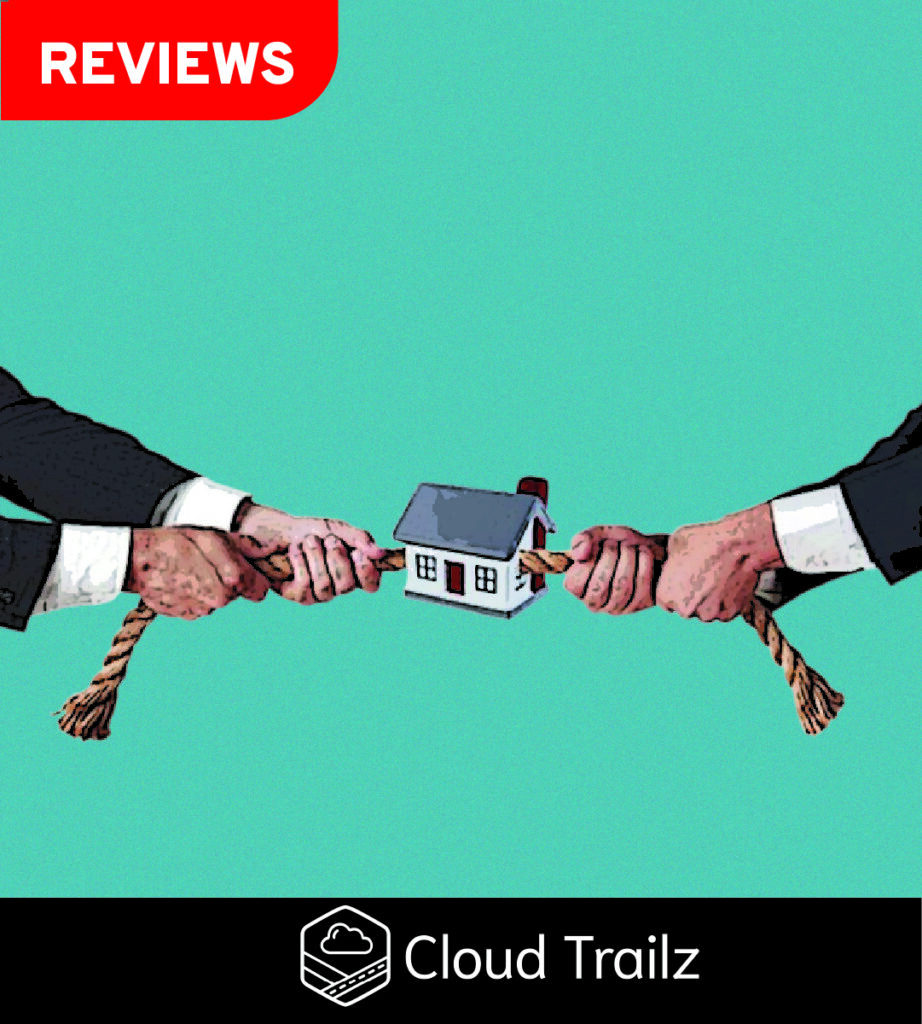
That’s where the wrestling match begins.
The farther a company moves from business development and closer to property operations, the harder standard Sales Cloud becomes to manage.
Why This Happens
Real estate companies are not actually managing sales opportunities.
They are managing:
- Properties
- Units
- Leases
- Listings
- Tenants
- Owners
- Brokers
- Investors
Salesforce was originally designed around a much simpler sales motion:
Account → Contact → Opportunity
Real estate companies naturally think more like:
Property → Unit → Lease/Listing → Tenant/Buyer/Broker/Owner
The issue isn’t that Salesforce is bad.
The issue is that many real estate firms end up asking Salesforce to become:
- A CRM
- A Property Management System
- A Reporting Platform
- A Workflow Engine
- An Integration Hub
All at the same time.
Many of the challenges discussed in this article appear during implementation, which is one reason real estate projects tend to become more complicated than expected.
1. Core Structure Mismatch
What It Is
Salesforce tends to organize itself around:
Account → Contact → Opportunity
Real estate companies naturally organize themselves around:
Property → Unit/Space → Lease/Listing/Deal → Tenant/Buyer/Broker/Owner
Those are fundamentally different ways of viewing the world.
What’s Actually Happening
Eventually real estate companies realize that Accounts, Contacts, and Opportunities are not the center of their business.
Properties are.
That causes people to start forcing property concepts into sales concepts.
Examples include:
- Opportunity = Lease
- Opportunity = Listing
- Account = Property Owner
- Account = Building
- Custom Object = Property
Over time different teams begin using Salesforce differently because there is no natural home for many of the concepts they care about.
What This Looks Like In Real Life
One commercial real estate investment company we worked with had a very creative owner who was constantly finding new ways to leverage relationships and investor networks.
The challenge wasn’t a lack of ideas. The challenge was that the data model couldn’t keep up with the changing definitions.
Person Accounts became particularly difficult.
An investor might also be:
- A broker
- A landlord
- A referral source
- A property owner
The company struggled to consistently define what a person actually meant to the business.
As those definitions shifted, Salesforce became harder and harder to organize.
Why It Matters
Eventually there is no choice but to create workarounds, customizations, and additional layers of complexity.
The more those layers grow, the harder reporting, automation, and maintenance become.
2. Properties Are Not Standard Objects
What It Is
Much of the real estate business revolves around properties.
Salesforce has no native concept of a property.
What’s Actually Happening
People often underestimate how much information hangs off a property.
Examples include:
- Square footage
- Occupancy
- Availability
- Rent Rates
- Ownership
- Building Classification
- Unit information
- Renewal dates
Organizations eventually find themselves creating large custom object structures simply to model things the industry expects to exist naturally.
What This Looks Like In Real Life
One corporate real estate organization wanted Salesforce to become the source of truth for their business.
The challenge was that the truth already lived in four or five different systems.
Each system exposed an API (to whatever degree they want to).
Each system maintained different information.
Each system had its own rules.
Each system had its own version of reality.
Instead of creating a clean source of truth, Salesforce became another participant in an already complicated ecosystem.
Reporting never really reached a point where it became broadly trusted because there were simply too many competing sources of information.
Why It Matters
Salesforce has no native concept of:
- Buildings
- Parcels
- Units
- Suites
- Leases
- Renewals
- Rent Rolls
- Availability
- Ownership structures
You either build those concepts yourself or purchase an industry-specific solution.
Every real estate company we’ve worked with eventually ends up doing one of those two things.
3. Real Estate Deals Involve Several Parties
What It Is
Real estate deals naturally involve a large number of people with highly fluid roles.
What’s Actually Happening
It’s not that Salesforce can’t handle complex relationships.
It’s that significant customization is often required before those relationships become manageable.
Different types of real estate businesses have very different participant structures.
A commercial leasing deal might involve:
- Tenant
- Landlord
- Leasing Broker
- Attorney
- Property Manager
An investment deal might involve:
- Seller
- Buyer
- Investor Group
- Asset Manager
- Lender
A development project might involve:
- Developer
- Municipality
- Investor
- General Contractor
- Broker
The standard Salesforce relationship model starts to buckle under this complexity.
What This Looks Like In Real Life
One investment-focused real estate company routinely encountered situations where someone could simultaneously be:
- A landlord
- Part of an investor group
- A broker
The standard Opportunity Contact Role model wasn’t sufficient because the relationships weren’t stable enough.
The business was evolving faster than the CRM structure (due to limited time/willingness to invest in data architecture).
Why It Matters
Buyer.
Seller.
Tenant.
Landlord.
Listing Broker.
Buyer Broker.
Attorney.
Lender.
Property Manager.
Investor.
Asset Manager.
Standard Opportunity Contact Roles are often not enough to model these relationships effectively.
4. MLS, IDX, And Property Data Integrations Get Messy Quick
What It Is
Property data is notoriously difficult to manage.
It changes constantly and often originates from systems outside Salesforce.
What’s Actually Happening
Property information changes every day.
Examples include:
- Pricing changes
- Availability changes
- Status changes
- Ownership changes
- Unit changes
Meanwhile many real estate systems:
- Own the source data
- Use different identifiers
- Manage duplicates differently
- Expose limited APIs
That creates synchronization problems.
What This Looks Like In Real Life
Imagine a commercial brokerage firm attempting to synchronize:
- MLS Data
- Property marketing systems
- Salesforce
- Property management software
Now four different systems are competing to decide which version of the property record is correct.
Eventually data discrepancies begin appearing.
Someone updates one system.
Another system doesn’t update.
Salesforce ends up either stale or flooded with duplicate information.
Why It Matters
Real estate software vendors often have little incentive to make Salesforce integration seamless.
They want users living inside their application, not moving the center of gravity into a CRM.
As a result, integrations frequently become one of the most expensive and frustrating parts of the project.
5. The Typical User Isn’t Interested In Data Entry
What It Is
This isn’t meant as a criticism of the industry.
It’s simply something we’ve observed repeatedly.
Many successful real estate professionals built their careers without Salesforce.
What’s Actually Happening
Their success often came from:
- Relationships
- Market Expertise
- Networking
- Reputation
- Personal intuition
From their perspective Salesforce can feel like additional work.
Especially when integrated data is already incorrect or difficult to trust.
What This Looks Like In Real Life
We frequently saw agents become frustrated with the quality of integrated data.
If they already distrusted the information entering the system, they saw very little reason to spend additional time contributing more information themselves.
The mindset became: “If the data isn’t right anyway, why should I spend my time maintaining it?”
That creates a vicious cycle where adoption declines and data quality deteriorates further.
Why It Matters
Brokers and agents typically won’t maintain Salesforce unless it provides immediate value.
More than many other industries, we’ve seen resistance because successful professionals already possess a system that works for them.
To a high-performing agent, Salesforce often looks like another step between them and the work they actually want to do.
That doesn’t make Salesforce bad.
It simply means the value proposition has to be extremely clear.
The Pattern Behind It
The farther you move from business development and closer to property operations, the harder standard Sales Cloud becomes to manage.
That’s the pattern behind nearly every real estate implementation we’ve seen.
Salesforce works very well as a CRM.
Many organizations struggle when they attempt to make it become:
- The CRM
- The Property Management Platform
- The Reporting Platform
- The Data Warehouse
- The Operational System
All at the same time.
The Common Mistake
Most real estate companies arrive at Salesforce because they have gaps in their technology stack.
Common examples include:
- Yardi
- MRI
- AppFolio
- CoStar
- LoopNet
Instead of using Salesforce to fill those gaps, companies often attempt to replace large portions of their ecosystem with Salesforce.
That’s usually where things begin to unravel.
What Good Looks Like Instead
The best outcomes typically come from being honest about what Salesforce is good at and what it isn’t.
Salesforce is excellent at:
- Relationship management
- Business development
- Pipeline visibility
- Reporting
- Workflow automation
It is not automatically excellent at being a property management platform.
You should also be honest about:
- What your industry tools do well
- How well they integrate with Salesforce
- What compromises will be required
If you’re serious about building real estate-specific functionality in Salesforce, Salesforce’s industry-specific offering is worth exploring before attempting to force standard Sales Cloud into a role it wasn’t originally designed to fill.
Closing Thought
This article is ultimately more of an observation than an indictment of Salesforce.
We’ve worked with enough real estate companies to see the same patterns emerge repeatedly.
Standard Sales Cloud can absolutely create value.
The challenge is understanding where that value begins and where it starts to strain under the weight of real estate operations.
If you’re evaluating Salesforce, struggling with an existing implementation, or trying to determine whether Salesforce is even the right fit for your real estate business, we’d be happy to have a conversation.